

Buying vs. Leasing Commercial Space in Hamilton: How to Compare the Full Cost
Deciding whether to buy or lease commercial space in Hamilton is not a simple choice between a monthly rent payment and a mortgage payment. The right comparison includes the price or rent, operating costs, financing, repairs, tenant improvements, time to occupy, and the degree of control the business needs.
For a growing business, a lease may preserve capital and offer a defined term. Ownership may provide greater control over the property and a different path for long-term planning, while also bringing financing and property responsibilities. Neither option is automatically safer or cheaper. The business has to compare the complete commitment against its cash flow, operating plan, and future needs.
This guide sets out a practical way to compare a commercial property purchase with a lease. It is general planning information, not legal, tax, or investment advice. Have a commercial real estate lawyer, lender, accountant, and qualified construction professional review the parts of the decision within their expertise.
Begin with the business objective
Start by defining what the space needs to do. Document the intended use, customer experience, equipment, staff, operating hours, delivery pattern, storage, and expected growth. Then identify how long the business expects to need the location and how much capital it must keep available for inventory, payroll, marketing, and operations.
Buying and leasing answer different questions. Ownership may fit a business that values control over improvements, expects to remain in one place, and can support the financing and property responsibilities. Leasing may fit a business that needs flexibility, wants to keep capital available for operations, or has a location strategy that may change. These are starting points, not rules. A strong decision depends on the actual property, deal terms, and financial plan.
Consider whether the business can carry the property through a slower period. A location can perform well and still require significant upfront work. It can also take longer than expected to reach full operations. Build a cash-flow view that shows when rent or mortgage payments begin, when construction payments are due, and when the business expects to open and generate revenue.
Compare all costs of buying and leasing
For a purchase, the analysis may include the purchase price, financing costs, closing expenses, property taxes, insurance, utilities, maintenance, capital repairs, and the work needed to adapt the building. The owner may also need to plan for professional fees, inspections, appraisal, environmental review, and changes required for the business use. The exact list depends on the property and transaction.
For a lease, compare base rent with additional rent, utilities, insurance obligations, maintenance responsibilities, deposits, fixturing conditions, rent commencement, and any other charges set out in the draft lease. Understand how costs are calculated, what records are available, and which costs can change. Do not assume that two leases use the same definitions or allocate responsibilities in the same way.
Both paths need a buildout budget. A vacant unit may need a full interior fit-out. A previously occupied space may still need new mechanical equipment, plumbing, electrical work, fire-safety changes, finishes, or layout changes. If the work has not been priced, the comparison is incomplete. The amount and timing of the work can affect the purchase or lease decision more than a small difference in advertised price.
| Cost or responsibility | Purchase review | Lease review |
|---|---|---|
| Initial cash requirement | Deposit, closing costs, financing conditions, and immediate work | Deposit, first payments, legal review, fixturing, and early project costs |
| Monthly occupancy | Debt service, taxes, insurance, utilities, and maintenance | Base rent, additional rent, utilities, insurance, and agreed charges |
| Building work | Owner-funded work, future repairs, and improvements | Tenant work, landlord work, allowances, and repair obligations |
| Control and change | Control depends on financing, approvals, and property obligations | Control depends on lease permissions, term, and negotiated conditions |
| Exit or transition | Sale timing, marketability, and property carrying costs | Expiry, renewal, assignment, subletting, and restoration terms |
Use the same time horizon for both options. If one model covers a short lease period and the other assumes many years of ownership, the results will not be comparable. Ask an accountant and lender to review the assumptions that affect tax treatment, financing, and cash flow. Have counsel explain the legal terms before the business relies on them.
Comparison principle: put the property cost and the cost of making it usable in the same model.
Assess control, risk, and flexibility
Control matters when a business needs specialized equipment, signage, operating hours, or a specific customer layout. An owner generally has more direct control over the property, subject to law, financing, and applicable approvals. A tenant’s control depends on the lease and the landlord’s consent rights. The details should be understood before drawings or construction commitments are made.
Ownership brings the responsibility to manage and fund property issues. These may include repairs, building systems, insurance, taxes, and capital work. Leasing does not remove all property risk: a lease can place substantial operating, repair, or restoration obligations on the tenant. Read the clauses that assign those responsibilities and model the possible costs rather than assuming they will remain stable.
Flexibility has a value too. A lease can make it easier to test a market or plan a move at the end of a term, depending on its conditions. Ownership can offer longer-term control, but selling a property can take time and carries transaction costs. A company with changing space requirements should examine renewal, expansion, contraction, assignment, and exit options. These are negotiation points, not automatic features.
For either route, check that the space can support the intended use. The City of Hamilton’s zoning verification information says the permitted use can differ from one property to another. Confirm the proposed use at the exact address before treating the purchase or lease as viable. Also assess the building’s condition, available records, and any environmental or technical review advised by qualified professionals.
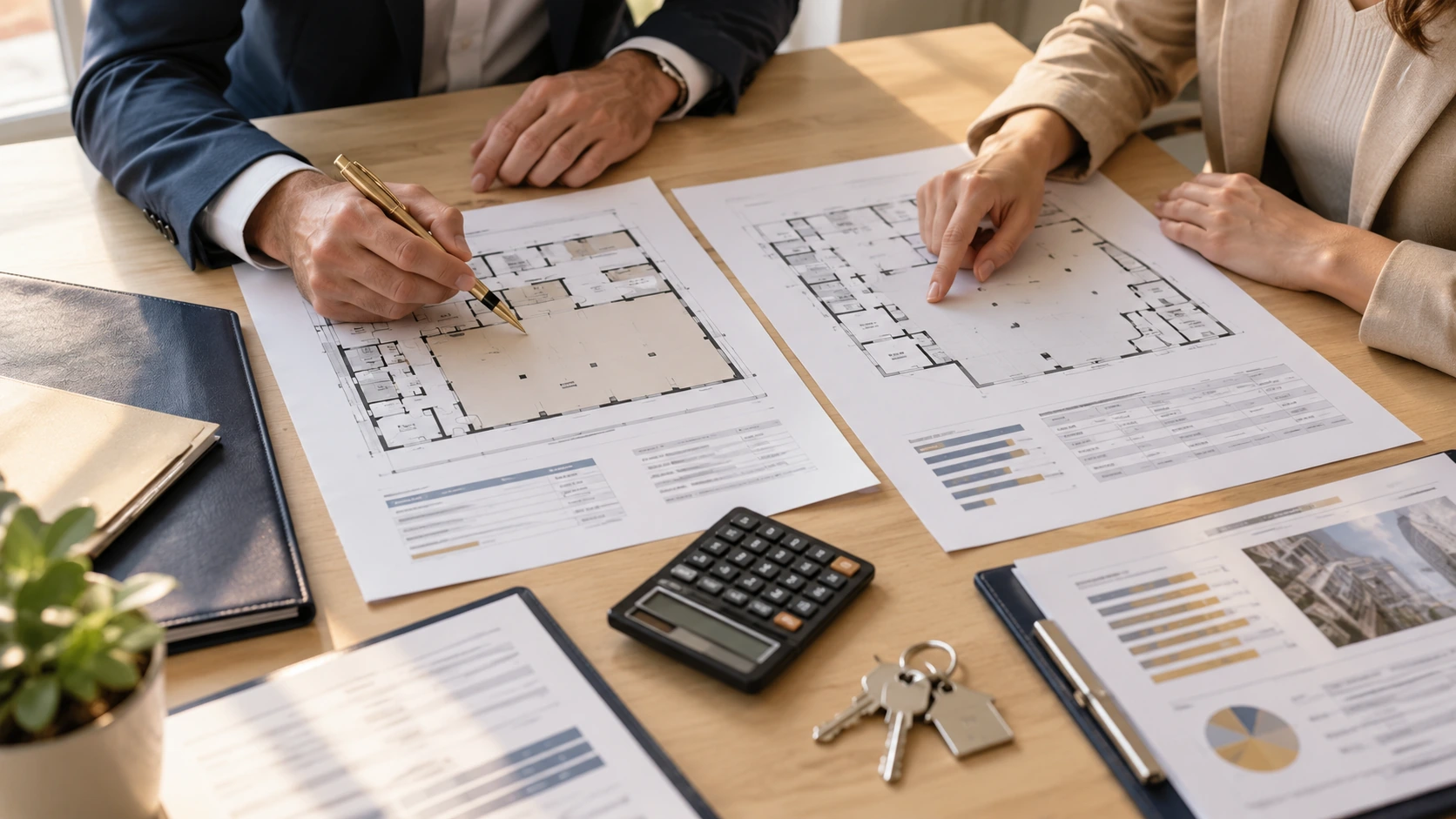
Use a consistent decision process
A decision becomes easier to explain when the team follows the same steps for each property. Keep a written record of assumptions, open items, and who is responsible for confirming them. That record also helps a lender, lawyer, contractor, or business partner see the decision in context.
- Set the operating brief. List the use, customer needs, space requirements, equipment, service capacity, and likely growth needs.
- Screen the location. Compare trade area, access, visibility, nearby businesses, permitted use, and future development.
- Inspect the building. Obtain available records and assign technical, environmental, and construction questions to qualified professionals.
- Build two complete financial models. Use a common time horizon and include upfront costs, monthly occupancy, buildout, incentives, maintenance, and exit assumptions.
- Review documents before commitment. Ask the lawyer, lender, and accountant to examine their relevant terms and conditions; resolve unanswered items in writing.
For a lease, negotiate the deal and the buildout as connected matters. The timing of rent, fixturing access, landlord work, tenant-improvement allowance, free-rent period, and the tenant’s construction scope can affect cash flow. For a purchase, connect the inspection and financing conditions with the work estimate and the approvals needed for the planned use.
Common comparison mistakes
- Using only base rent and mortgage payment. These figures leave out additional rent, repairs, utilities, taxes, insurance, closing costs, and construction.
- Assuming the landlord or seller has confirmed the use. Verify zoning and any business-specific approvals directly with the appropriate authority.
- Comparing unequal timelines. A short lease and long ownership horizon need a consistent period for comparison.
- Counting an allowance as cash in hand. Review eligibility, documentation, approval, timing, and reimbursement conditions.
- Signing before pricing the buildout. The scope can change the economics of both a purchase and a lease.
Day One Commercial brings Targeted Acquisition, Strategic Terms, Custom Buildout, and Launch to Success into one project sequence. That structure is useful because the location, contract, construction budget, and opening plan affect one another. A deal should be assessed with the full project in view, while each legal, financial, and technical question is reviewed by the right professional.
Frequently asked questions
Is buying commercial space cheaper than leasing in Hamilton?
There is no universal answer. The comparison depends on the property price, financing, lease terms, operating costs, construction needs, time horizon, and the business’s use of capital. Prepare a complete model for both options and have qualified advisers review the assumptions.
What does total occupancy cost include?
It can include base rent or ownership costs, additional rent charges, utilities, insurance, taxes, maintenance, and the cost of adapting and operating the space. The exact items depend on the property and contract. Identify each charge from the documents instead of relying on a general definition.
Should I price the buildout before signing?
Yes. A preliminary, scope-based estimate helps show whether the property can be adapted within the business’s budget and schedule. The estimate should identify assumptions, exclusions, unresolved building conditions, and any approvals that could change the scope.